
There is something special about the weeks before Christmas. Lights brighten the dark evenings, shop windows fill with tiny Christmas villages, and the smell of baking drifts through the house. There are presents to wrap and people to look forward to seeing. Even as an adult, it is easy to feel a little of that childhood excitement again.
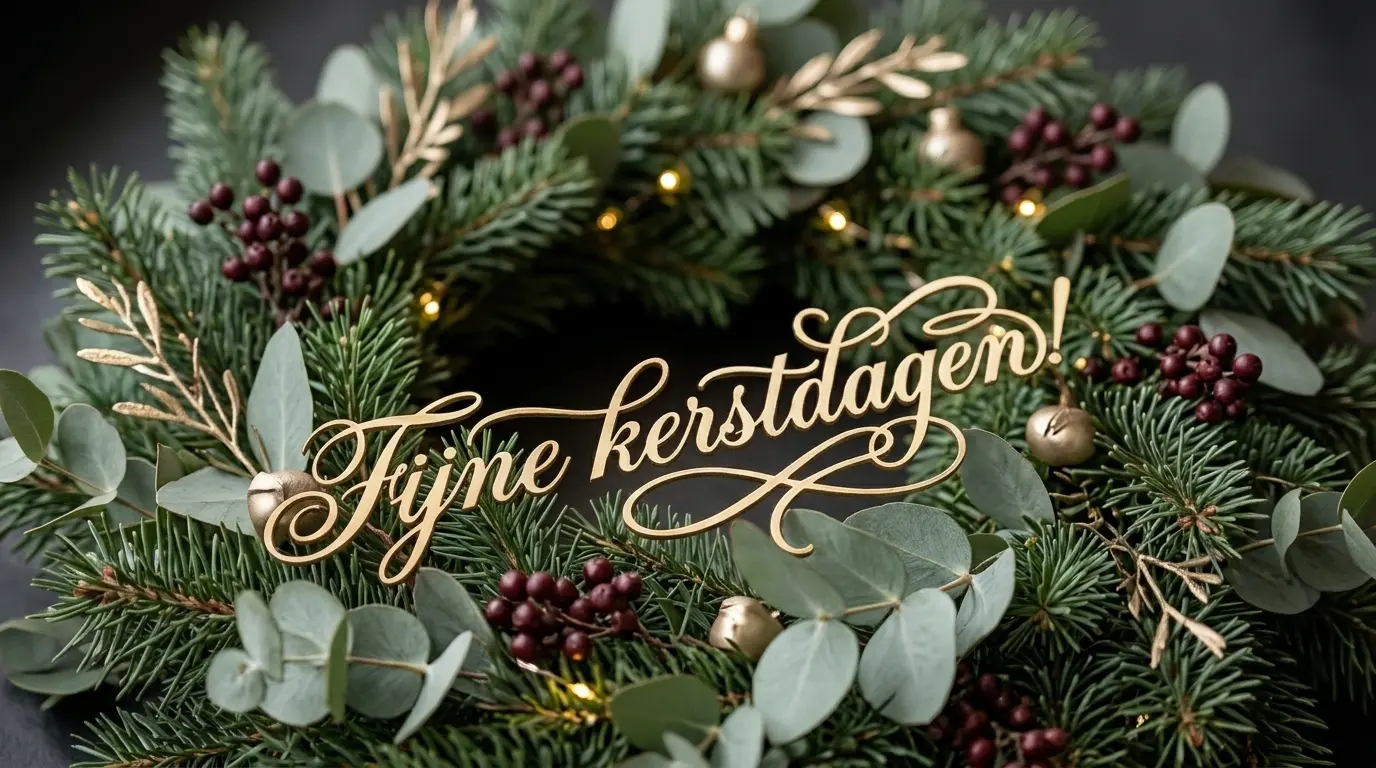
If you live in the Netherlands or are visiting for the holidays, try wishing someone a merry Christmas in Dutch. A neighbour, colleague or friend will appreciate a cheerful Fijne kerstdagen! You do not need a long speech or a large vocabulary. A greeting and a simple reply will give you something to say the next time you meet.
1. How to say Merry Christmas in Dutch
Two straightforward choices are Prettige kerstdagen! and Fijne kerstdagen! Both mean ‘Merry Christmas’ or ‘Happy Christmas’. You can say them in person or write them in a card or message. Vrolijk kerstfeest! is another familiar Christmas wish. For a short message to a friend, Fijne kerst! works too.
| Greeting | Meaning and use |
|---|---|
| Fijne kerstdagen! | Merry Christmas! Suitable for conversations, messages and cards. |
| Prettige kerstdagen! | Merry Christmas! Another greeting you can use in all these situations. |
| Vrolijk kerstfeest! | Merry Christmas! Use it in person or on a card. |
| Fijne kerst! | Merry Christmas! A short, informal version. |
| Fijne feestdagen! | Happy holidays! A general wish for the Christmas and New Year period. |
You may notice that kerstdagen is plural: literally, ‘Christmas days’. In the Netherlands, both 25 and 26 December are Christmas holidays, known as the first and second days of Christmas. The natural English translation of the greeting is still simply ‘Merry Christmas’.
2. Fijne kerstdagen or fijne feestdagen?
In late December, you will also hear Fijne feestdagen! — ‘Happy holidays!’ This covers the festive period, including Christmas and New Year. It is a useful farewell before colleagues head off on holiday, or a greeting for someone whose celebrations you do not know much about. To mention Christmas specifically, choose Fijne kerstdagen!
Both Fijne kerstdagen! and Prettige kerstdagen! work with friends and people you know less well. There is no strict rule that one is friendly and the other formal. In a longer greeting, the form of ‘you’ makes the distinction: use je for someone you address informally and u for a more formal or respectful address.
To a friend or someone you address informally
Ik wens je fijne kerstdagen!
I wish you a merry Christmas!
For a more formal greeting
Ik wens u fijne kerstdagen!
I wish you a merry Christmas!
To a family or group of friends
Ik wens jullie fijne kerstdagen!
I wish you all a merry Christmas!
In the last example, jullie means ‘you’ when you are speaking to several people. It is useful for greeting a whole family. The shorter Prettige kerstdagen! has no pronoun, so you can use it without choosing a form of address.
3. When to say it and how to reply
You can exchange Christmas wishes before Christmas itself. Say them when colleagues leave for their holiday break, or when you say goodbye to friends you will not see again until afterwards. Fijne kerstdagen! fits naturally at the end of that conversation. The same greetings work on Christmas Eve, 24 December, and during the Christmas holidays.
If someone wishes you a merry Christmas first, reply Dank je wel, jij ook! — ‘Thank you, you too!’ For a more formal reply, use Dank u wel, u ook! Another option is Dank je wel, hetzelfde! — ‘Thank you, same to you!’ A short answer and a smile are quite enough.
A quick exchange before Christmas
— Fijne kerstdagen!
— Dank je wel, jij ook!
— Merry Christmas!
— Thank you, you too!
You can also repeat the greeting: Dank je wel! Jij ook fijne kerstdagen! — ‘Thank you! Merry Christmas to you too!’ When replying to several people, say Dank jullie wel, jullie ook! — ‘Thank you all, you too!’
4. What to write in a Christmas card or message
Choosing a card, writing a few lines by hand and posting it to someone you will not see at Christmas can be a lovely part of the preparations. A message can be personal too: thank someone for their help, wish them good health or tell them you miss them. Start with a Christmas greeting, then add whatever you would like that person to know.
A quick message to a friend
Fijne kerstdagen! Geniet ervan!
Merry Christmas! Enjoy the holidays!
Geniet ervan! means ‘Enjoy it!’ Here, it refers to Christmas, so ‘Enjoy the holidays!’ is a natural translation. You can add it to a message or say it as you wave goodbye.
Christmas and New Year wishes
Prettige kerstdagen en een gelukkig nieuwjaar!
Merry Christmas and a happy New Year!
For a more general greeting, replace Prettige kerstdagen with Fijne feestdagen: Fijne feestdagen en een gelukkig nieuwjaar! — ‘Happy holidays and a happy New Year!’
A warm greeting for a family
Ik wens jullie fijne kerstdagen en een gezond en gelukkig nieuwjaar!
Wishing you all a merry Christmas and a healthy, happy New Year!
A greeting for a business contact
Bedankt voor de prettige samenwerking dit jaar. Wij wensen u fijne feestdagen en een gelukkig nieuwjaar!
Thank you for working with us this year. We wish you happy holidays and a happy New Year!
Wij wensen means ‘we wish’, so this version suits a greeting from a team or company. If you are writing just for yourself, use ik wens — ‘I wish’ — instead.
5. If you are nervous about saying it aloud
A phrase can sound fine in your head and suddenly feel difficult when it is time to say it. The Dutch g may be one reason you hesitate. Start with Fijne kerst! if that feels easier: it is short and contains no g sound.
Listen to a recording of the greeting and say it aloud a few times. Take your time. If you stumble during the conversation, you can simply try again. An accent need not stop you from wishing someone a merry Christmas.
The Dutch g also sounds different from region to region. There is no need to make it as harsh as possible. Follow the pronunciation in your recording, and choose a greeting you feel comfortable saying for your first attempt.
6. Spelling your Christmas wishes correctly
Before you send your card, check the capital letters. In standard Dutch spelling, kerst, kerstdagen, kerstfeest and feestdagen are lowercase. Write Fijne kerstdagen!, with a capital only at the start of the sentence. The full name of the holiday, Kerstmis, takes a capital K.
In the greeting een gelukkig nieuwjaar, nieuwjaar is one word and lowercase: the wish is for the coming year. You may see extra capitals on printed cards as a design choice. For an ordinary message, you can follow the standard spelling used here.
Perhaps you will greet the neighbours you usually only wave to, the colleague who helped you settle into a new job, or the friends who invited you for Christmas dinner. A simple Fijne kerstdagen! is a good place to start. A few kind words can make those familiar faces feel a little closer at Christmas.